

What your poop says about your health can reveal a lot about your digestion and overall well-being.
Your poop might not be a topic you talk about at the dinner table, but it can reveal a surprising amount about your digestive health and overall well-being. The colour, shape, and frequency of your bowel movements can provide clues about how your gut is functioning, whether your diet is balanced, and if your body is properly hydrated. By learning to recognize what healthy and unhealthy poop looks like, you can spot potential issues early and make simple adjustments to support digestion and overall health.
Understanding your stool isn’t just a matter of curiosity — it’s a practical way to monitor your gut, prevent digestive problems, and maintain a healthier lifestyle.

What Healthy Poop Looks Like
Not all poop is created equal. Healthy stool is usually smooth, well-formed, and easy to pass, indicating that your digestive system is functioning properly. Typical characteristics of healthy poop include:
- Shape: Log or sausage-like
- Texture: Soft but firm, without cracks or hard lumps
- Colour: Light to dark brown
- Ease of passage: Should pass comfortably without straining
Normal bowel movement frequency can vary, typically anywhere from three times a day to three times a week, depending on your diet, hydration, and body’s rhythm. Consistently observing these healthy signs usually means your gut is balanced and digestion is running smoothly.
Even small changes in stool shape, colour, or consistency can offer early clues about your diet, hydration, or gut health — which makes paying attention to your poop a simple but powerful health habit.
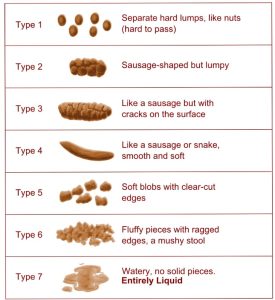
The Bristol Stool Chart — Understanding Stool Types
The Bristol Stool Chart is a simple tool used by healthcare professionals to classify stool into seven types based on shape and consistency. It helps you identify whether your bowel movements are healthy or if there may be digestive issues like constipation or diarrhea.
Stool Types Overview:
| Type | Description | What It May Indicate |
|---|---|---|
| 1 | Separate hard lumps | Constipation, slow transit |
| 2 | Lumpy, sausage-like | Mild constipation |
| 3 | Cracked log | Normal, healthy |
| 4 | Smooth, snake-like | Normal, healthy |
| 5 | Soft blobs | Lack of fibre |
| 6 | Fluffy, mushy | Mild diarrhea |
| 7 | Watery | Diarrhea, fast transit |
Understanding your stool type helps you monitor gut health, hydration, and diet, and can alert you to changes that might require attention. Types 3 and 4 are considered the healthiest and most indicative of good digestion.

What Poop Colour Reveals
The colour of your poop can tell you a lot about your digestion, diet, and gut health. Normal stool is usually brown, thanks to a mix of bile and broken-down red blood cells. Changes in colour, however, can indicate something about your diet or, in some cases, a potential health issue.
Common Stool Colours and What They May Mean:
- Brown: Normal and healthy
- Green: Often caused by rapid transit through the intestines or eating leafy green vegetables
- Black: Could be due to iron supplements, certain medications, or bleeding in the upper digestive tract
- Red: May result from foods like beets or tomatoes, but persistent red stools could indicate bleeding in the lower digestive tract
- Yellow or greasy: May suggest fat malabsorption issues, like celiac disease
- Pale or clay-coloured: Could signal bile duct or liver issues
While occasional changes in stool colour are usually harmless and linked to food or supplements, persistent abnormal colours — especially black, red, or pale stools — should be checked by a healthcare professional.

Poop Frequency and What It Means
How often you poop can provide important clues about your digestive health. While frequency varies from person to person, most healthy adults have bowel movements anywhere from three times a day to three times a week.
What different patterns may indicate:
- Less than 3 times per week: Possible constipation, slow intestinal transit, or low fibre intake
- More than 3 times per day: Could suggest diarrhea, food sensitivities, or faster digestion
- Sudden changes in frequency: Even if occasional, they may indicate dietary changes, stress, or underlying digestive issues
Paying attention to your regular rhythm helps you notice early changes that could signal a problem, allowing you to adjust your diet, hydration, and lifestyle habits for healthier digestion.

Other Clues Your Poop Can Reveal
Beyond colour, shape, and frequency, there are other signs your digestion may be trying to tell you. These include:
- Smell: Extremely foul-smelling stool may suggest digestive imbalance or malabsorption.
- Mucus: A small amount can be normal, but large amounts might indicate irritation or inflammation.
- Undigested food: Occasionally noticing undigested bits is normal, but frequent occurrences could point to digestive inefficiency.
While occasional changes are typically harmless and linked to diet or hydration, persistent patterns or combinations of these signs may require professional evaluation. Paying attention to these subtle signals helps you maintain a healthier gut and prevent more serious digestive issues.

Tips for Healthier Bowel Movements
Supporting regular, comfortable bowel movements is mostly about healthy habits and lifestyle choices. Small adjustments can make a big difference in digestion and overall gut health.
Key tips include:
- Eat more fibre: Include fruits, vegetables, whole grains, and legumes in your diet to help stool move smoothly.
- Stay hydrated: Drink plenty of water throughout the day to soften stool and support digestion.
- Include probiotics: Yogurt, kefir, and fermented foods can help maintain a balanced gut microbiome.
- Be active: Regular exercise stimulates intestinal movement and improves overall digestive function.
- Limit processed foods: Excess sugar and refined foods can disrupt gut health and stool consistency.
By consistently practicing these habits, you can improve digestion, support gut health, and maintain regular, healthy bowel movements.

FAQ
How often should I poop?
Normal frequency varies, but anywhere from three times a day to three times a week is generally healthy if it’s consistent for you.
Is green poop always a problem?
Not always — it can result from foods like leafy greens or rapid digestion. Persistent green stools with other symptoms may require medical advice.
What does black stool mean?
Black stools can be caused by iron supplements or certain foods, but they can also indicate bleeding in the upper digestive tract. If it persists, see a doctor.
Can poop colour change due to food?
Yes — foods like beets, berries, or food colouring can temporarily change stool colour. Occasional changes are usually harmless.
Your stool can provide important information about your digestive system. According to the Healthdirect health resource, the colour, shape, and texture of your stool are useful markers of how well your digestive system is functioning, with brown, smooth stools generally indicating healthy digestion and variations offering clues about things like diet, hydration, or potential concerns.
The Centre for GI Health explains that stool consistency and frequency, as shown on the Bristol Stool Chart, range from hard lumps to watery stools, helping identify constipation or diarrhea and indicating whether your bowel habits are within a normal range.
Information from the Cleveland Clinic highlights how stool colour can be influenced by diet, bile production, or underlying health conditions, noting that persistent colour changes — especially black, red, pale, or clay‑coloured stools — may warrant medical evaluation
