

If you’ve been hitting the gym consistently but still aren’t gaining muscle, here’s why you’re not gaining muscle and how to fix it fast.
Many people put in hours of effort, follow workout programs, and eat “healthy,” yet their bodies don’t change. The reason? Building muscle isn’t just about lifting weights. It’s about how you train, what you eat, how you recover, and how consistent you are.
Muscle growth, or hypertrophy, requires a combination of effective training, adequate nutrition, proper recovery, and smart habits. Neglecting any of these areas can silently sabotage your progress. Let’s dive into the most common pitfalls and what you can do to finally see results.

Training Smart: Why You’re Not Gaining Muscle from Workouts
Many people believe that simply showing up at the gym and lifting weights will make muscles grow. But without proper stimulus, your muscles have no reason to adapt.
Common training mistakes:
- Lifting the same weight with the same reps for months.
- Only focusing on “mirror muscles” like biceps and chest.
- Ignoring proper form and mind-muscle connection.
- Doing endless cardio without balancing strength training.
How to fix it:
- Progressive overload: Gradually increase weight, reps, or sets over time. Your muscles need to be challenged to grow.
- Compound exercises: Squats, deadlifts, bench presses, pull-ups, and rows recruit multiple muscle groups and stimulate more growth.
- Exercise variety: Change your routine every 6–8 weeks with techniques like drop sets, supersets, tempo variations, or different angles.
- Mind-muscle connection: Focus on the muscle you’re targeting rather than just moving weight. This improves effectiveness and reduces the risk of injury.
How long before you see results?
Most beginners notice changes within 6–8 weeks if they are training consistently with proper form, nutrition, and recovery. Muscle growth is gradual — small, consistent gains over months lead to significant results.
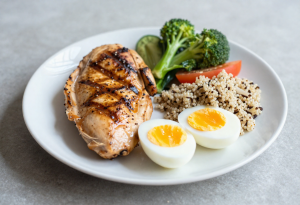
Nutrition: Fueling Muscle Growth and Why You’re Not Gaining Muscle
Even the best workout won’t result in growth without proper nutrition. Muscles need protein, calories, and nutrients to repair and expand.
Protein:
- Essential for muscle repair and growth.
- Aim for 1.6–2.2 grams per kilogram of body weight daily. For someone weighing 70kg, that’s 112–154g per day.
- Too much protein isn’t harmful for most healthy people, but excess protein won’t build extra muscle — it may just be stored as energy.
- Good sources: lean meats (chicken, turkey, beef), fish, eggs, Greek yogurt, cottage cheese, beans, lentils, tofu, tempeh, or protein powders.
Calories:
- To build muscle, you need a slight calorie surplus — eat more calories than you burn.
- Track your intake for a few weeks to find the right balance. Eating too little will prevent growth; eating too much may add unwanted fat.
- Carbs and fats:
- Carbs fuel workouts and replenish glycogen stores, improving energy for lifting. Examples: oats, rice, quinoa, potatoes, fruits.
- Fats support hormone production (like testosterone), which is essential for muscle growth. Examples: avocados, nuts, seeds, olive oil.
Practical tips:
- Eat protein at every meal.
- Include a post-workout meal with protein and carbs within 30–60 minutes.
- Focus on whole foods for nutrients, fibre, and micronutrients.
- Hydrate — muscles need water to function optimally.

Recovery: How Sleep & Rest Affect Muscle Growth
Many people underestimate recovery. Muscles grow when you rest, not when you lift.
Recovery essentials:
- Sleep: 7–9 hours per night. Growth hormone, testosterone, and repair processes all peak during sleep.
- Rest days: Include 1–2 full rest days weekly. Overtraining can stall progress and increase injury risk.
- Active recovery: Light walking, stretching, or yoga promotes blood flow and reduces soreness.
Signs of under-recovery:
- Constant fatigue
- Plateauing strength
- Mood swings or irritability
- Persistent soreness or small injuries
Prioritizing recovery accelerates gains, boosts energy, and protects against burnout.
Why Balance Matters
Focusing only on certain muscles, like the chest or biceps, can cause imbalances and slow overall growth.
Tips for balanced development:
- Full-body routines 2–3 times per week engage all major muscle groups.
- Include isolation exercises for weaker muscles (rear delts, hamstrings, calves).
- Track progress with photos, measurements, and strength improvements.
Balanced training improves strength, symmetry, and reduces injury risk.
Consistency: The Silent Growth Factor
Even the best strategies fail without consistency. Muscle growth is slow and cumulative.
Consistency tips:
- Treat workouts like appointments.
- Meal prep to meet protein and calorie targets.
- Track workouts and body changes.
- Celebrate small improvements to stay motivated.
- Small, daily actions compound into significant results over time.

Common Mistakes That Stall Muscle Growth
- Skipping progressive overload: Without challenge, muscles don’t adapt.
- Not eating enough protein or calories: Growth requires fuel.
- Ignoring recovery: Overtraining reduces results.
- Excessive cardio: Too much endurance work can interfere with strength gains.
- Poor form or focusing on weight over quality: Injuries and ineffective lifts slow progress.
Extra Tips for Faster Gains
- Change up routines every 6–8 weeks.
- Use high-intensity techniques occasionally: drop sets, supersets, rest-pause.
- Focus on the mind-muscle connection.
- Track macros and calories for at least 2–4 weeks.
- Stay hydrated to support muscle function and recovery.
Frequently Asked Questions
Q1: Why am I training hard but not gaining muscle?
There are several reasons you might not be seeing muscle gains even with consistent workouts — not eating enough calories to support growth, insufficient protein intake, or not challenging your muscles adequately with progressive overload (gradually increasing weight or reps). These factors are common culprits when gains stall.
Q2: How much protein do I need to build muscle?
Protein provides the amino acids your body needs to repair and grow muscle tissue. Many experts recommend a range of around 1.6–2.2 g of protein per kilogram of body weight per day to maximize muscle growth when strength training regularly.
Q3: Can I build muscle if I’m in a calorie deficit?
Gaining significant muscle while in a calorie deficit is difficult because muscle growth requires energy. Without enough calories and nutrients, your body simply doesn’t have the resources needed for optimal muscle repair and synthesis, which can slow or stall progress.
Q4: Does sleep affect muscle growth?
Yes. Sleep is crucial for muscle repair and recovery, since much of muscle protein synthesis and anabolic hormone release occurs during deep sleep. Insufficient sleep can elevate stress hormones like cortisol, which can hinder muscle growth.
Q5: Why do some people gain strength but not visible muscle?
Especially in beginners, strength improvements can occur without noticeable size increases because the nervous system becomes more efficient at activating muscles first. Visible hypertrophy can take longer to develop and requires consistent training, proper nutrition, and adequate recovery.
According to Harvard Health, combining resistance training with sufficient protein intake helps support muscle repair and growth, as protein supplies the amino acids your body needs to rebuild muscle fibres broken down during strength training and preserve lean mass with age.
