

You wake up feeling lighter, flatter, and more comfortable in your body — but by evening, everything feels tighter. Your clothes fit differently, your stomach feels fuller, your face might look puffier, and you feel heavier overall. Naturally, your mind jumps to food. Did I eat too much? Did I mess up my day? Is this fat gain?
The truth is, feeling heavier at night is incredibly common, and in most cases, it has very little to do with overeating or fat gain. What you’re usually experiencing is a mix of water retention, digestion, hormones, and daily habits stacking up throughout the day. Once you understand what’s really happening inside your body between morning and bedtime, it becomes much easier to stop blaming yourself — and start working with your body instead of against it.
Your Body Naturally Holds More Water as the Day Goes On
Gravity plays a bigger role in how your body feels than most people realize. When you spend the day upright — sitting, standing, walking — fluid naturally shifts downward. This can lead to swelling in the legs, ankles, and even the abdominal area by evening. Rings feel tighter. Shoes feel snug. Your stomach feels heavier.
Sodium intake makes this effect stronger. Even one salty meal can cause your body to hold onto water for days, which is why many people feel suddenly bloated or heavier without changing how much they eat. This is explained in more detail in The Salt Trap: How One Salty Meal Can Make You Bloated for 72 Hours on Health Mode Online.
If you’ve been eating out more, enjoying holiday foods, or relying on packaged snacks, water retention — not fat — is usually the main culprit.
Digestion Peaks Later in the Day
Food doesn’t disappear once you eat it. Everything you consume throughout the day still exists somewhere in your digestive system by evening. Breakfast, lunch, snacks, dinner — all of it adds physical volume.
By nighttime, your stomach and intestines are working harder to break food down, absorb nutrients, and move waste along. This can create pressure, bloating, and fullness even if you ate balanced meals. If digestion feels slow or uncomfortable later in the day, it can also be linked to gut health issues, something we explore further in How to Heal Leaky Gut Fast: Simple Steps That Work.
Foods that ferment more easily — such as refined carbs, dairy, artificial sweeteners, or highly processed foods — tend to create more gas and bloating in the evening.
Hormones Shift as the Day Winds Down
Hormones aren’t static. Cortisol (your stress hormone) should gradually decline as the day goes on, but stress, rushing, decision fatigue, and poor sleep can keep cortisol elevated into the evening. Higher cortisol encourages water retention and can make your body feel heavier and puffier at night.
Insulin sensitivity also decreases later in the day, meaning your body processes carbohydrates differently in the evening than in the morning. This doesn’t mean eating at night causes fat gain — but it does mean your body may temporarily hold onto more water and glycogen, which adds weight on the scale.
If weight loss feels stalled despite “doing everything right,” hormone-related habits are often part of the picture. This is also why many women unknowingly slow their progress, as explained in The 5 Biggest Metabolism Mistakes Women Make Without Realizing It.
You’re Seeing Your Body After a Full Day of Living 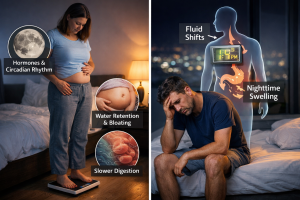
Morning bodies are misleading. Overnight, you’re horizontal, not eating, not drinking, and losing water through breathing and perspiration. This naturally creates a leaner appearance.
By contrast, your evening body reflects a full day of hydration, meals, sodium intake, digestion, and stress. Comparing your night body to your morning body is comparing two completely different physiological states. This is also why weighing yourself at night almost always shows a higher number — something we break down more clearly in Water Weight vs Fat Gain: How to Tell the Difference.
Why Evening Bloat Feels Worse During Weight Loss
When you’re actively trying to lose weight, you notice every change. Calorie reduction, changes in carbs, fluctuating sodium intake, and stress can all make your body more sensitive to water shifts.
Ironically, this can make you feel more bloated at night even while fat loss is happening underneath. This is why many people wake up encouraged, feel discouraged by evening, and repeat the cycle daily — even when progress is happening.
Hydration Can Make or Break How You Feel at Night
Not drinking enough water actually makes evening heaviness worse. When your body senses dehydration, it holds onto fluid as a survival mechanism. Proper hydration helps flush excess sodium and supports digestion, reducing water retention over time.
This is why hydration plays such a big role in reducing puffiness and supporting weight loss, something we explain in Why Hydration Is One of the Most Overlooked Keys to Weight Loss. Spreading water intake evenly throughout the day — instead of front-loading it — helps your body release fluid instead of clinging to it.
Movement Is One of the Fastest Fixes
Long periods of sitting allow fluid to pool in the lower body and abdomen. Gentle movement in the evening — especially a short walk after dinner — improves circulation, supports digestion, and reduces bloating naturally.
Even 10–20 minutes can make a noticeable difference, which is why this habit is so powerful for both digestion and sleep. If this is something you struggle with, Why a 10–20 Minute Walk After Dinner Can Change Your Blood Sugar, Digestion, and Sleep explains exactly why it works.
It’s Not About Eating Less — It’s About Eating Smarter at Night
Skipping dinner or undereating often backfires, increasing stress hormones and worsening water retention. What matters more is meal composition.
Meals higher in sodium, refined carbs, or heavy fats tend to increase nighttime bloating. Balanced meals with protein, fiber, and potassium-rich foods help counteract fluid retention. Alcohol can also significantly worsen nighttime heaviness, even in small amounts, which is why it often derails progress, as explained in How Alcohol Slows Down Your Weight Loss Without You Realizing It.
How to Reduce That “Heavy” Feeling Without Dieting Harder
Small shifts make a big difference:
• Drink water consistently throughout the day
• Balance salty foods with potassium-rich choices
• Eat slowly at dinner
• Take a short walk after eating
• Avoid tight clothing late in the day
• Create a calming nighttime routine
• Stop body-checking at night
• Weigh yourself at the same time of day if you choose to weigh at all
These habits help your body reset overnight so you wake up feeling lighter again.
The Takeaway
Feeling heavier at night doesn’t mean you failed. It doesn’t mean you gained fat. It means your body is responding to gravity, digestion, hydration, hormones, and stress — all normal processes.
Once you understand this, evening discomfort becomes far less emotional and far easier to manage. Your body isn’t working against you — it’s communicating with you.
References
Mayo Clinic – Water Retention & Bloating
https://www.mayoclinic.org
Cleveland Clinic – Digestive Health & Fluid Balance
https://my.clevelandclinic.org
