

If you’ve ever tried to lose weight, you might have wondered: Are potatoes good for weight loss? They’re often lumped into the “bad carbs” category alongside bread and pasta, but the truth is, potatoes can actually be one of the most helpful foods for fat loss.
Potatoes are filling, affordable, and versatile, helping support satiety, steady energy, and consistency — three factors far more important for weight loss than cutting carbs entirely.
The key isn’t the potatoes themselves; it’s usually how they’re prepared and what they’re paired with.
Here’s why potatoes can work with your weight-loss goals, not against them.
Potatoes Are One of the Most Filling Foods You Can Eat
One of the biggest challenges with weight loss is hunger. When you’re constantly hungry, it’s only a matter of time before willpower runs out.
Potatoes score extremely high on the satiety index, which measures how full foods make you feel compared to their calorie content. In simple terms, potatoes help you feel full on fewer calories than many other foods.
A plain boiled or baked potato provides volume, fibre, and water content, all of which signal fullness to your brain. This can naturally reduce snacking and overeating later in the day without you having to consciously restrict yourself.
Feeling satisfied after meals makes sticking to a calorie deficit much easier.

They’re Lower in Calories Than You Think
Potatoes have developed a reputation as being “high calorie,” but when prepared simply, they’re actually quite moderate.
A medium potato contains roughly 110–130 calories. That’s less than many people realise, especially when compared to foods like pasta, rice, pastries, or processed snack foods.
The issue usually comes from deep frying, heavy oils, butter, sour cream, or cheese. Once you strip those away and focus on boiling, baking, air-frying, or steaming, potatoes become a very weight-loss-friendly carb.
It’s not the potato that causes weight gain. It’s what we add to it.
Potatoes Help You Stick to Your Diet Long Term
One reason diets fail is that they feel too restrictive. Cutting out foods you enjoy can make weight loss feel miserable and unsustainable.
Potatoes are familiar, comforting, and satisfying. Including them in meals can make a healthy eating plan feel more normal and enjoyable, which increases the chances you’ll stick with it long enough to see results.
If potatoes help you stay consistent instead of quitting, they’re doing their job.
Weight loss isn’t about perfection. It’s about sustainability.
They Support Energy and Workouts
When calories are lower, energy levels often take a hit. This can make workouts feel harder and daily movement less appealing.
Potatoes provide carbohydrates that help replenish glycogen, the stored energy your body uses during exercise. Having enough energy supports better workouts, more movement, and better recovery, all of which play a role in fat loss.
Low energy often leads to skipped workouts and reduced daily activity, which can stall progress.
Eating enough carbs — including potatoes — can actually help prevent that.
Potatoes Are Nutrient-Dense, Not Empty Calories
Potatoes aren’t just carbs. They also provide important nutrients that support overall health.
They’re a good source of potassium, which helps regulate fluid balance and muscle function. They also contain vitamin C, B vitamins, and fibre, especially when eaten with the skin on.
When you’re dieting, nutrient density matters. Foods that provide vitamins and minerals help your body function better while you’re eating fewer calories.
Feeling better makes it easier to stay on track.

Cold Potatoes Can Support Blood Sugar and Gut Health
An interesting benefit many people don’t know about is resistant starch.
When potatoes are cooked and then cooled, some of the starch becomes resistant starch. This type of starch isn’t fully digested and instead feeds beneficial gut bacteria.
Resistant starch may help with blood sugar control and satiety, which can be useful for weight loss. This is why foods like potato salad made with minimal oil, or leftover potatoes added to meals, can be surprisingly helpful.
You don’t need to overthink it, but it’s a nice bonus.
How to Eat Potatoes for Weight Loss
The key to making potatoes work for weight loss is preparation and balance.
Boiled, baked, steamed, or air-fried potatoes are your best options. Keeping added fats to a moderate level makes a significant difference.
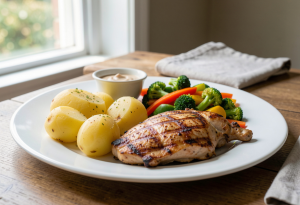
Pair potatoes with protein like eggs, fish, chicken, or yoghurt-based sauces. Protein increases fullness and helps prevent blood sugar spikes.
Adding vegetables alongside potatoes increases volume and fibre without adding many calories, helping you feel even more satisfied.
Portion size still matters, but you don’t need to eliminate potatoes to lose weight.

Potatoes Can Reduce Cravings and Binges
One of the sneakiest benefits of including potatoes is how they reduce cravings.
When meals are too light or carb-free, cravings often hit later in the day, which can lead to overeating snacks, sweets, or takeaway foods.
A balanced meal that includes potatoes can leave you feeling satisfied for hours, reducing the urge to snack or binge later on.
This is especially helpful after holidays or periods of overeating, when the goal is to stabilise appetite rather than restrict harder.
Why Potatoes Are Better Than Many “Diet” Foods
Many so-called diet foods are highly processed and designed to be low-calorie but not necessarily satisfying.
Potatoes are whole foods. They’re affordable, easy to prepare, and naturally filling. They don’t require special products or expensive ingredients.
For many people, replacing ultra-processed foods with simple meals that include potatoes can actually lead to better weight-loss results.
Sometimes simpler really is better.
Frequently Asked Questions
Q1: Are potatoes good for weight loss?
Yes — when prepared simply and eaten in moderation as part of a balanced diet, potatoes are filling, low in calories relative to volume, and can support satiety and fat-loss goals.
Q2: Do potatoes make you gain weight?
Potatoes themselves don’t cause weight gain. Weight gain usually comes from added fats, frying, or pairing potatoes with high-calorie toppings.
Q3: What is the best way to cook potatoes for weight loss?
Boiling, baking, steaming, or air-frying are the healthiest options. Avoid deep frying and heavy sauces.
Q4: Can cold potatoes help with blood sugar?
Yes — cooled potatoes form resistant starch, which feeds beneficial gut bacteria and may help stabilise blood sugar and increase feelings of fullness.
Q5: Should I pair potatoes with protein?
Absolutely. Combining potatoes with protein like eggs, fish, or chicken can improve satiety and help prevent blood sugar spikes, making them even more supportive of weight-loss goals.
Why Potatoes Can Support Weight Loss
Potatoes aren’t the enemy when it comes to weight loss — they can actually be one of your best allies. When prepared simply and eaten as part of a balanced diet, potatoes are filling, nutrient‑dense, and supportive of steady energy levels. They can help reduce cravings, keep you satisfied between meals, and make it easier to stick to your weight‑loss goals long term. Instead of avoiding potatoes, focus on smarter preparation methods like boiling, baking, steaming, or air‑frying, and pair them with protein and vegetables for maximum satiety and nutrition.
Research supports this approach: the Harvard T.H. Chan School of Public Health highlights that potatoes can be a nutrient‑rich part of a balanced diet and may help keep you full because of their fibre and water content, making them a useful food choice for weight management.
