

Bone and joint health foods are essential for keeping your bones strong and your joints flexible. Eating the right nutrients daily can reduce inflammation, support bone density, and protect cartilage.
Your bones and joints work hard every day, supporting movement, balance, and strength. But aging, inflammation, and nutrient deficiencies can weaken them, increasing the risk of fractures, arthritis, and chronic pain. The good news? What you eat plays a huge role in keeping them strong and healthy.
Tip: A well-balanced diet rich in key nutrients can support bone density, joint flexibility, and overall mobility. Small changes add up over time.
Key Nutrients for Bone and Joint Health
Bones and joints need a combination of vitamins, minerals, and proteins to stay healthy:
1. Calcium
- Essential for strong bones and teeth
- Supports nerve and muscle function
- Found in dairy, fortified plant milks, leafy greens, and almonds
Tip: Adults need about 1,000–1,200 mg of calcium per day — that’s roughly 2–3 servings of calcium-rich foods.
2. Vitamin D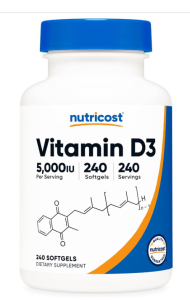
- Helps the body absorb calcium efficiently
- Supports immune function and bone remodeling
- Sources: sunlight, fatty fish, fortified foods, supplements if necessary
Tip: Just 10–20 minutes of sun exposure a few times a week can boost vitamin D levels — but check with your doctor if you live in low-sunlight regions.
3. Magnesium
- Works with calcium for strong bones
- Helps reduce inflammation in joints
- Sources: nuts, seeds, whole grains, leafy greens
Tip: Magnesium-rich foods also support muscle relaxation, which can ease joint tension.
4. Vitamin K
- Vital for bone mineralization
- Supports collagen in cartilage
- Found in kale, spinach, broccoli, and Brussels sprouts
Tip: Add a handful of leafy greens daily — it’s one of the simplest ways to boost both bone and joint health.
5. Omega-3 Fatty Acids
- Anti-inflammatory properties for joint health
- Supports cartilage and reduces stiffness
- Sources: salmon, sardines, walnuts, chia seeds, flaxseeds
Tip: Try two servings of fatty fish per week or sprinkle seeds/nuts on meals for plant-based omega-3s.
6. Protein
- Supports bone matrix and muscle strength
- Helps maintain lean mass to protect joints
- Sources: eggs, beans, lentils, yogurt, lean meats
Tip: Don’t skimp on protein — older adults especially need enough to maintain both bone and muscle strength.
Foods That Support Bone Health
Dairy and Fortified Alternatives
- Milk, yogurt, cheese, or fortified plant-based milks
- High in calcium, vitamin D, and protein
Leafy Greens
- Kale, collard greens, bok choy, spinach
- Packed with calcium, magnesium, and vitamin K
Fatty Fish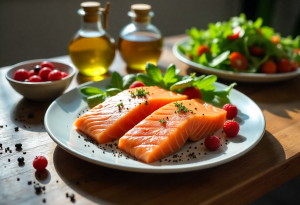
- Salmon, sardines, mackerel
- Provide vitamin D and omega-3 fatty acids
Nuts and Seeds
- Almonds, walnuts, chia, flaxseed
- Rich in magnesium, protein, and healthy fats
Tip: Incorporate a small serving of nuts or seeds daily — they are nutrient-dense and easy to add to meals.
Foods That Support Joint Health
Anti-Inflammatory Fats
- Olive oil, avocado, fatty fish
- Reduce inflammation and improve joint comfort
Berries
- Blueberries, strawberries, blackberries
- High in antioxidants that protect cartilage
Spices and Herbs
- Turmeric, ginger, garlic
- Natural anti-inflammatory compounds
Tip: Add a pinch of turmeric or ginger to soups, smoothies, or teas daily — it can support joint comfort over time.
Foods That Support Both Bones and Joints
Some foods do double duty:
- Yogurt – calcium + protein
- Salmon – vitamin D + omega-3
- Leafy greens – calcium, magnesium, vitamin K + anti-inflammatory properties
- Nuts & seeds – protein, magnesium + healthy fats
Tip: Aim to include at least one of these “dual benefit” foods in every meal.
Foods to Limit
While these won’t directly cause bone or joint disease, excessive intake can interfere with bone strength or increase inflammation:
- Highly processed foods
- Sugary drinks and snacks
- Excess sodium (can reduce calcium retention)
Tip: Balance is key — you don’t need to cut everything, just moderate intake.
Simple Ways to Add These Foods Daily
- Start the day with fortified yogurt or oatmeal with seeds
- Include a leafy green salad or vegetable side at lunch
- Snack on a handful of nuts
- Add fatty fish to dinner 2x/week
- Use olive oil as your primary cooking fat
Tip: Consistency is more important than perfection — small, daily changes make a big difference over time.
References
