
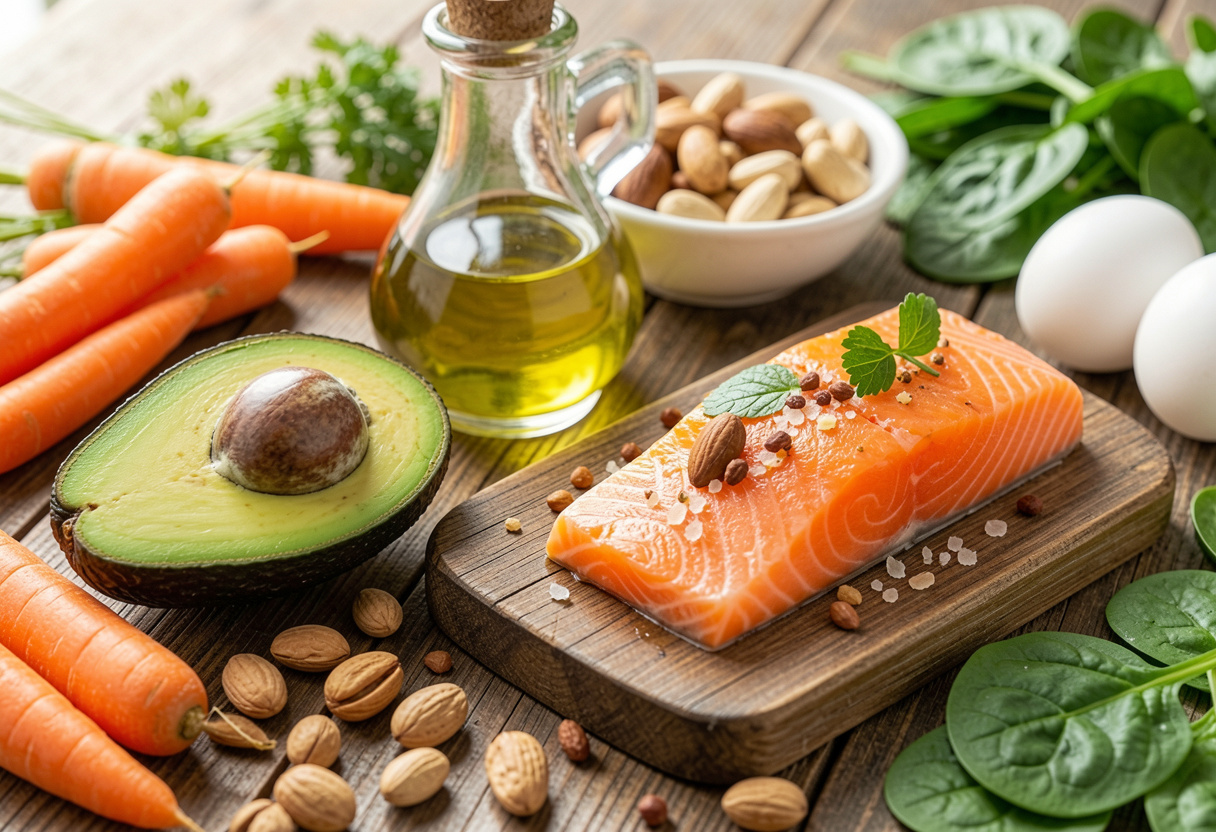
What are healthy fats, and why does your body need them? Fats often get a bad reputation, but not all fats are created equal. Healthy fats are essential nutrients that provide energy, support brain and heart health, aid in hormone production, and help your body absorb fat-soluble vitamins like A, D, E, and K.
Including the right types of fats in your diet can also help you feel full longer, support metabolism, and reduce unhealthy cravings. In this article, we’ll explore the types of healthy fats, their benefits, the best sources, and how to incorporate them into your daily meals.
What Are Healthy Fats?
Healthy fats are types of dietary fat that support your body’s vital functions and promote overall health. Unlike trans fats or excessive saturated fats, healthy fats can help reduce inflammation, improve cholesterol levels, and protect your heart.
The two main types of healthy fats are:
1. Monounsaturated Fats
- Found in foods like avocados, olive oil, almonds, and cashews
- Can help lower “bad” LDL cholesterol while maintaining “good” HDL cholesterol
- Supports heart health, brain function, and satiety
- Often used in cooking or salad dressings for a healthy fat boost
2. Polyunsaturated Fats
- Include omega-3 and omega-6 fatty acids, which are essential fats your body cannot produce
- Omega-3 sources: Fatty fish (salmon, sardines), walnuts, chia seeds, flaxseeds
- Omega-6 sources: Vegetable oils (sunflower, corn), nuts, seeds
- Benefits include reducing inflammation, supporting brain and heart health, and regulating cholesterol
- Must be balanced in the diet to avoid excess omega-6, which can increase inflammation
Avoid unhealthy fats:
- Trans fats: Often found in processed snacks, baked goods, and fried foods
- Excessive saturated fats: Found in fatty cuts of meat, butter, and full-fat dairy in large amounts
Monounsaturated vs Polyunsaturated Fats
| Type of Fat | Common Sources | Key Benefits | Notes |
|---|---|---|---|
| Monounsaturated | Avocado, olive oil, almonds, cashews | Lowers LDL cholesterol, supports the heart and brain, and increases satiety | Stable for moderate cooking |
| Polyunsaturated | Fatty fish, walnuts, flaxseeds, sunflower oil | Reduces inflammation, supports the heart and brain, essential fatty acids | Includes omega-3 and omega-6, balance is key |

What Are Unhealthy Fats?
Unhealthy fats are types of fat that can negatively impact heart health, cholesterol levels, and inflammation when consumed in excess.
1. Trans Fats
- Found in processed snacks, baked goods, fried foods, and margarine
- Raises bad LDL cholesterol and lowers good HDL cholesterol
- Linked to heart disease, inflammation, and metabolic issues
2. Excessive Saturated Fats
- Found in fatty cuts of meat, butter, cheese, and full-fat dairy
- In moderate amounts, some saturated fats are fine, but excess can increase LDL cholesterol and raise heart disease risk
3. Tips to Reduce Unhealthy Fats
- Read labels and avoid partially hydrogenated oils
- Opt for lean meats, low-fat dairy, and plant-based oils
- Cook with healthy fats like olive oil instead of butter or lard
Healthy vs Unhealthy Fats
| Type of Fat | Common Sources | Health Impact | Notes |
|---|---|---|---|
| Monounsaturated & Polyunsaturated (Healthy) | Avocado, olive oil, nuts, fatty fish | Supports the heart, brain, and hormones; reduces inflammation | Essential for body functions |
| Saturated & Trans Fats (Unhealthy) | Butter, cheese, fried foods, processed snacks | Raises LDL cholesterol, increases inflammation, and increases heart disease risk | Limit intake; replace with healthy fats |

Why Your Body Needs Healthy Fats
Healthy fats are essential for many of your body’s vital functions beyond just providing energy. Including them in your diet supports:
1. Energy Source
Fats are a dense source of energy, providing 9 calories per gram — more than double the energy from carbohydrates or protein. They help fuel long-term activity and maintain stable energy levels.
2. Brain and Nervous System Health
Your brain is nearly 60% fat, and consuming healthy fats supports cognition, memory, and nerve function. Omega-3 fatty acids, in particular, play a key role in brain development and function.
3. Hormone Production
Healthy fats are essential for making hormones like estrogen, testosterone, and cortisol. A diet low in fats can disrupt hormone balance, affecting mood, metabolism, and reproductive health.
4. Heart and Cholesterol Support
Monounsaturated and polyunsaturated fats help lower LDL cholesterol and increase HDL cholesterol, reducing your risk of heart disease.
5. Absorption of Fat-Soluble Vitamins
Vitamins A, D, E, and K require fat to be absorbed properly. Eating healthy fats alongside these nutrients ensures your body gets the full benefits of your diet.
Best Sources of Healthy Fats
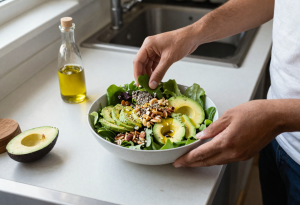
Including healthy fats in your diet is simple when you know which foods to choose. Here are the most effective sources of healthy fats:
1. Avocados
Rich in monounsaturated fats, avocados help lower LDL cholesterol and improve heart health. They’re also packed with fiber, potassium, and antioxidants.
2. Nuts and Seeds
Almonds, walnuts, cashews, chia seeds, and flaxseeds are excellent sources of monounsaturated and polyunsaturated fats, including omega-3s. They also provide protein, fiber, and micronutrients.
3. Olive Oil and Other Plant Oils
Extra virgin olive oil is a versatile cooking oil rich in monounsaturated fats. Canola, sunflower, and safflower oils provide polyunsaturated fats and are great for salad dressings and low-heat cooking.
4. Fatty Fish
Salmon, sardines, mackerel, and trout are high in omega-3 fatty acids, which support heart, brain, and eye health. Including fish 2–3 times per week is recommended.
5. Coconut Oil (in moderation)
Coconut oil contains medium-chain triglycerides (MCTs), which are metabolized differently from other saturated fats. Use it occasionally in cooking or baking.
Table: Healthy Fat Sources Quick Reference
| Food | Type of Fat | Key Benefits | Serving Tips |
|---|---|---|---|
| Avocado | Monounsaturated | Heart health, fiber, satiety | Add to salads, toast, or smoothies |
| Almonds, Walnuts | Mono & Polyunsaturated | Omega-3, anti-inflammatory, protein | Snack, handful or sprinkle on meals |
| Olive Oil | Monounsaturated | Heart, vitamin absorption | Dressings, sautéing, drizzle on cooked veggies |
| Salmon, Sardines | Omega-3 | Heart, brain, eye health | Bake, grill, or pan-sear 2–3x/week |
| Coconut Oil | Saturated (MCTs) | Quick energy, metabolism support |

How Much Healthy Fat Do You Need?
Eating healthy fats is important, but portion and balance matter. Too little can affect hormone production and nutrient absorption, while too much can lead to excess calories.
Daily Recommendations:
- Healthy fats should make up roughly 20–35% of your total daily calories.
- For an average 2,000-calorie diet, that equals about 44–78 grams of fat per day.
Tips for Portioning Healthy Fats:
- Avocado: ½ medium avocado = ~10–15 g fat
- Nuts & Seeds: 1 small handful (~28 g) = ~15–20 g fat
- Olive Oil: 1 tablespoon = ~14 g fat
- Fatty Fish: 100 g cooked salmon = ~10–15 g fat
Balancing Your Meals:
- Combine fats with protein and complex carbohydrates to stay full longer.
- Spread intake throughout the day instead of consuming a large amount at once.
- Swap unhealthy fats for healthy options wherever possible (e.g., olive oil instead of butter, avocado instead of mayonnaise).
Eating the right amounts of healthy fats supports heart health, brain function, hormone balance, and nutrient absorption.
Common Myths About Fats
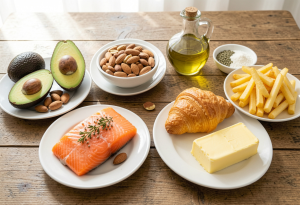
Fats often get a bad reputation, but many of the beliefs about fat are outdated or misleading. Here are some of the most common myths:
Myth 1: “All Fat Makes You Fat”
Not all fats are created equal. Healthy fats provide energy, support hormones, and help you feel full. Eating them in moderation does not automatically lead to weight gain.
Myth 2: “Saturated Fat Is Always Bad”
While excessive saturated fat can affect cholesterol, moderate amounts from whole foods like dairy or coconut can be part of a balanced diet. Focus on overall dietary patterns rather than avoiding them entirely.
Myth 3: “Low-Fat Diets Are Best”
Cutting out fats entirely can reduce absorption of fat-soluble vitamins (A, D, E, K) and impair hormone function. A balanced diet with healthy fats is more beneficial than extreme low-fat diets.
Myth 4: “Vegetable Oils Are Always Healthy”
Some vegetable oils are high in omega-6 fats, which, in excess, can promote inflammation. Opt for olive, canola, or sunflower oils in moderation and maintain omega-3 balance.
Myth 5: “Fats Should Be Avoided for Heart Health”
Eating the right types of fat — monounsaturated and polyunsaturated — actually protects your heart and improves cholesterol levels.

FAQ About Healthy Fats
Q1: What are the healthiest fats to eat daily?
Healthy fats include monounsaturated and polyunsaturated fats. Key sources are avocados, nuts, olive oil, and fatty fish like salmon. Including a variety of these in your daily meals supports heart, brain, and hormone health.
Q2: Can healthy fats help with weight management?
Yes — eating healthy fats in moderation can increase satiety, help balance blood sugar, and reduce unhealthy cravings. Replacing processed or trans fats with healthy options can support long-term weight management.
Q3: Are there any risks if I eat too much fat?
Consuming excessive fat — even healthy types — increases calorie intake, which may lead to weight gain. Balance fats with protein and carbohydrates and stick to recommended portions (~20–35% of daily calories).
Q4: Are saturated fats always bad?
Not necessarily. Moderate amounts of saturated fats from whole foods, like dairy, eggs, or coconut, can be part of a balanced diet. Focus on overall dietary patterns rather than eliminating all saturated fats.
Q5: How do I replace unhealthy fats with healthy fats?
- Use olive oil instead of butter for cooking or dressings
- Snack on nuts instead of chips or pastries
- Include fatty fish instead of processed meats a few times per week
Healthy fats are a crucial part of a balanced diet and support many bodily functions, including heart and brain health, energy production, and absorption of fat‑soluble vitamins. According to Harvard Health, choosing unsaturated fats — such as those found in olive oil, nuts, seeds, and fatty fish — can lower bad LDL cholesterol and improve overall health when they replace saturated fats in the diet. The Mayo Clinic notes that including sources like olive oil and omega‑3‑rich fish helps maintain healthy cholesterol levels and reduces cardiovascular risk.
