
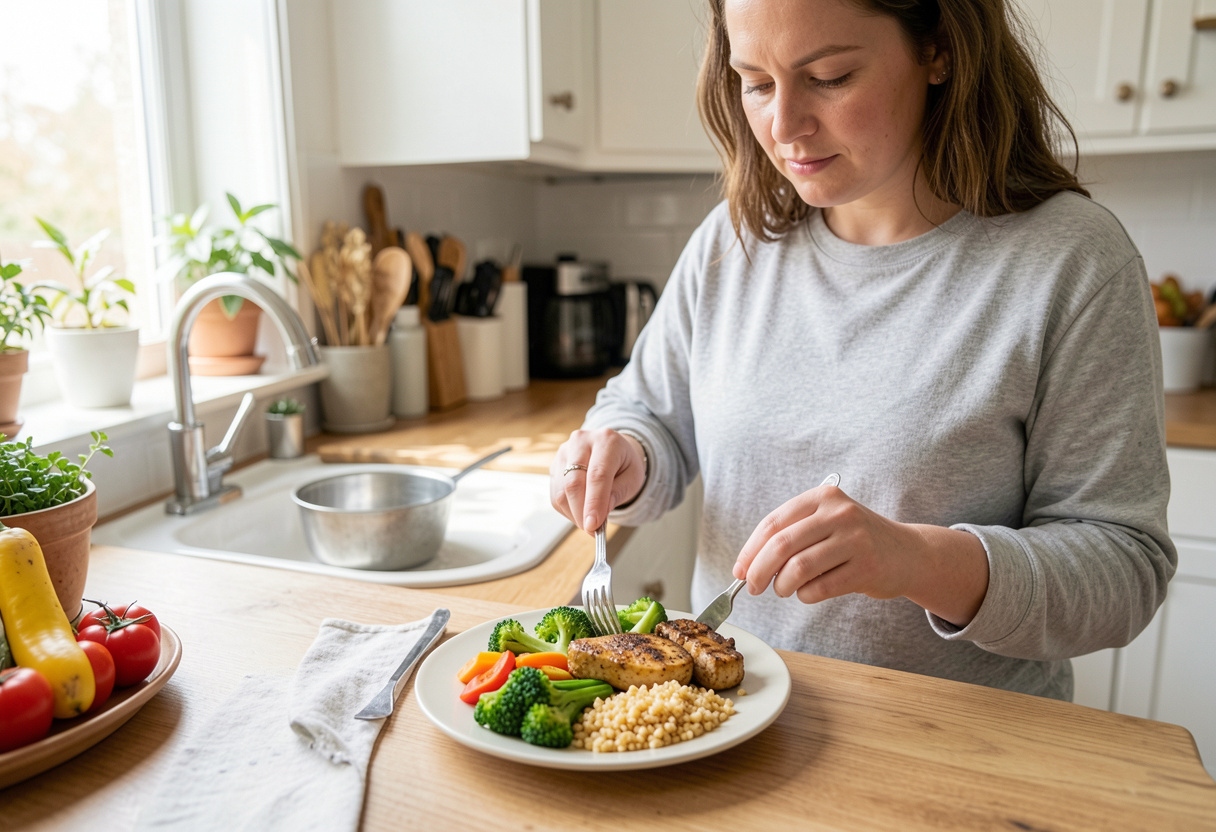
Portion control for weight loss is about more than just eating less—it’s about eating the right amount for your body and goals. Many people accidentally eat more than they need, which can make losing weight harder, even when they choose healthy foods.
Learning how much to eat and using simple strategies to manage your portions can help you enjoy your favorite meals without overdoing it. This guide will show practical tips, easy portioning methods, and everyday habits to help you stay on track and make sustainable changes for long-term weight loss success.
What’s the Difference Between Portion Size and Serving Size?
Understanding the difference between portion size and serving size is key to managing your weight effectively.
- Serving size is the amount recommended on food labels or by nutrition guidelines. It’s a standard measurement used to help you track calories and nutrients.
- Portion size is the amount you actually eat at one meal or snack. Often, your portion is larger than the recommended serving, which can unintentionally increase calorie intake.
For example, a serving of pasta might be ½ cup cooked, but many people serve themselves 1–2 cups at dinner. Learning to recognize and measure portions can help you stay within your calorie goals without feeling hungry or restricted.
By paying attention to both serving sizes and your portions, you can make smarter choices and stay in control of your weight loss journey.
How Much Should You Eat? — Portion Guides
Figuring out the right portion sizes can make a big difference in weight loss. While individual needs vary based on age, activity level, and goals, there are some simple guides you can use for everyday meals.
Visual Portion Guides:
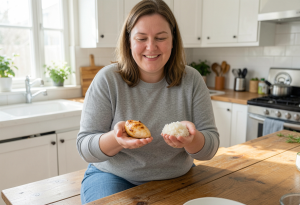
- Protein: One palm-sized portion (chicken, fish, tofu)
- Carbs: One cupped hand (rice, pasta, grains)
- Fats: One thumb-sized portion (olive oil, nuts, butter)
- Vegetables: Two fist-sized portions
Fill half your plate with vegetables, one-quarter with lean protein, and one-quarter with carbs.
Practical Tips:
- Use smaller plates and bowls to naturally reduce portions.
- Pre-portion snacks instead of eating directly from the bag or container.
- Start meals with vegetables or a salad to fill up first.
- Eat slowly and pay attention to hunger cues to avoid overeating.
These strategies make it easier to stick to your calorie goals without feeling deprived, helping you achieve sustainable weight loss.
Practical Portion Control Tips for Weight Loss
Portion control doesn’t have to be complicated. Small changes in how you serve and eat your food can have a big impact on weight loss over time. Here are some practical tips you can start using today:
-
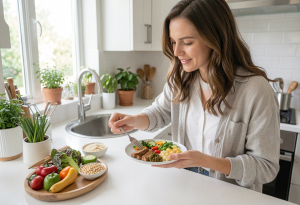
Use smaller plates and bowls – A smaller dish makes your portions look fuller, helping you feel satisfied with less food.
-
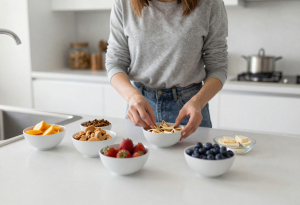
Pre-portion snacks – Avoid eating straight from the bag or container. Divide snacks into small bowls or reusable containers.
-
Start with vegetables – Fill half your plate with vegetables before adding protein and carbs. This helps you feel full without extra calories.
-
Eat slowly and mindfully – Take your time with each bite and pay attention to hunger cues. It takes about 20 minutes for your brain to register fullness.
-
Plan meals ahead – Preparing meals in advance helps prevent overeating and makes portion control easier.
-
Avoid distractions while eating – Turn off screens and focus on your meal to prevent unconscious overeating.
By implementing these simple strategies, you can take control of your portions and stay on track with your weight loss goals without feeling deprived.
Common Portion Control Mistakes to Avoid
Even when you try to control portions, it’s easy to make mistakes that can sabotage your weight loss efforts. Here are some common pitfalls to watch out for:
-
Eating straight from large containers or packages – It’s easy to lose track of how much you’re consuming. Always portion out servings first.
-
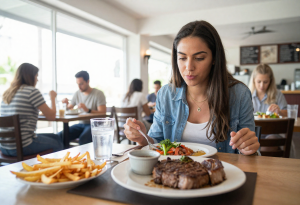
Restaurant and takeout portions – Many meals are larger than a standard serving. Consider sharing, saving half for later, or using the plate method to divide your meal.
-
Skipping meals – Skipping breakfast or lunch can lead to overeating later. Eat balanced meals to keep hunger under control.
-
Ignoring snacks – Small snacks can add up if you don’t measure them. Pre-portion nuts, chips, or treats to avoid overindulging.
-
Not paying attention while eating – Watching TV or scrolling on your phone can make it easy to eat more than intended. Focus on your meal to recognize fullness cues.
By being aware of these mistakes, you can make small adjustments that keep your portion control consistent and support long-term weight loss success.
How Portion Control Fits Into a Healthy Weight Loss Plan
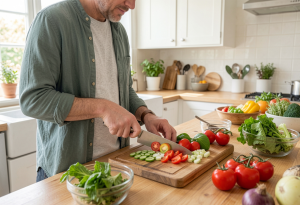
Portion control is just one piece of the weight loss puzzle, but it plays a key role in creating a sustainable, healthy routine. When combined with a balanced diet and regular physical activity, controlling how much you eat helps you manage calories without feeling deprived.
-
Balanced meals: Pair portion control with nutrient-rich foods—vegetables, lean protein, whole grains, and healthy fats—to keep you satisfied longer.
-
Consistency over perfection: You don’t need to measure every bite. Focus on habits like using the plate method or hand guides to guide your portions.
-
Complement with activity: Portion control works best alongside regular exercise, helping your body use calories efficiently.
-
Mindful adjustments: Listen to your hunger and fullness cues. Gradually reducing portion sizes rather than making drastic changes is easier to maintain long-term.
By integrating portion control into your daily routine, you can create a balanced and realistic approach to weight loss that fits your lifestyle and supports lasting results.
Frequently Asked Questions
1. How can I tell if my portion is too big?
A simple way is to use visual cues: a palm-sized portion for protein, a cupped hand for carbs, a thumb for fats, and two fists for vegetables. If your plate is overflowing, it’s likely more than you need.
2. Can I still eat my favorite foods while controlling portions?
Yes! Portion control is about how much you eat, not eliminating foods. Enjoy treats in smaller amounts and balance them with vegetables, protein, and whole grains.
3. Do I need to weigh or measure every meal?
Not necessarily. Hand guides, the plate method, and mindful serving habits are usually enough for everyday meals. Measuring can help at first until you get a feel for proper portions.
4. How often should I adjust my portions?
Adjust based on hunger, activity level, and weight loss goals. As your body changes, you may need slightly larger or smaller portions to stay on track.
5. Are snacks included in portion control?
Absolutely. Pre-portioning snacks helps prevent overeating and keeps calorie intake consistent throughout the day.
Portion control plays a key role in managing calorie intake and supporting healthy weight loss. According to the Mayo Clinic, many people unintentionally eat larger portions than recommended, which can slow weight loss or contribute to weight gain. The Cleveland Clinic Health site notes that paying attention to portion sizes can help manage weight and prevent overeating by limiting excess calories and balancing meals.
