

Potassium is an essential mineral your body needs to function properly. It helps your heart beat steadily, supports muscle contractions, regulates fluid balance, and keeps your nerves working efficiently. Despite its importance, many people don’t get enough potassium from their diet, which can lead to fatigue, muscle cramps, and other health issues.
Understanding what potassium does, why it’s crucial for your health, and how to get enough from everyday foods can help you stay energized, maintain healthy blood pressure, and support overall well-being.

What Potassium Does in the Body
Potassium plays several vital roles in the body. It helps regulate fluid balance, ensuring your cells have the right amount of water. This mineral also supports muscle function, allowing smooth contractions whether you’re moving, exercising, or even just breathing.
Your heart relies on potassium to maintain a steady heartbeat, and your nerves use it to send electrical signals efficiently. Without enough potassium, these processes can slow down, leading to fatigue, muscle cramps, and even irregular heart rhythms in severe cases.
Maintaining adequate potassium intake is crucial not only for daily energy and movement but also for long-term cardiovascular and muscular health.

Signs You Might Have Low Potassium
Not getting enough potassium can show up in subtle ways — and sometimes people don’t realize their diet is lacking this essential mineral. Common signs of low potassium include:
- Muscle cramps or weakness – even mild movement can feel tiring or uncomfortable.
- Fatigue or low energy – your body struggles to maintain normal functions without enough potassium.
- Irregular heartbeat – potassium helps keep your heart rhythm steady, so a deficiency can cause palpitations.
- Digestive issues – constipation or bloating can occur because potassium helps your muscles, including those in your digestive tract, move food along.
- Tingling or numbness – low potassium can affect nerve signaling, causing unusual sensations.
If you notice these symptoms regularly, it may be a sign that you need more potassium in your diet. Severe deficiency is uncommon but can be serious, so it’s important to address low intake early.
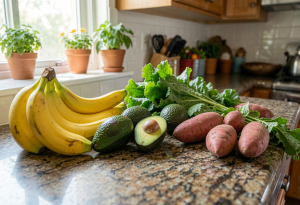
Foods High in Potassium
Getting enough potassium is key to muscle function, heart health, and fluid balance. Many everyday foods are naturally rich in potassium, making it easy to meet your daily needs.
Here’s a handy table showing common potassium-rich foods, their serving sizes, and how much potassium they provide:
| Food | Serving Size | Potassium (mg) |
|---|---|---|
| Banana | 1 medium (118g) | 422 |
| Sweet Potato | 1 medium (130g) | 438 |
| Avocado | 1 medium (150g) | 708 |
| Spinach | 1 cup cooked (180g) | 839 |
| Kidney Beans | 1 cup cooked (260g) | 713 |
| Salmon | 3 oz (85g) | 319 |
| Yogurt | 1 cup (245g) | 573 |
| Almonds | 1 oz (28g) | 208 |
Including a mix of these foods in your meals can help you maintain healthy potassium levels, support muscle contractions, regulate fluid balance, and keep your heart rhythm steady.
Tip: Adults generally need around 2,500–3,000 mg of potassium per day, though this can vary depending on age, sex, and activity level. People with kidney disease or certain medical conditions should consult a healthcare professional before increasing potassium intake.
Adding potassium-rich fruits, vegetables, legumes, dairy, nuts, and fish into your daily diet is one of the simplest ways to protect your health naturally.

How to Get Enough Potassium Safely
Getting enough potassium doesn’t have to be complicated. Most people can meet their daily needs through a balanced diet rich in fruits, vegetables, legumes, dairy, nuts, and fish.
Here are some practical tips:
- Prioritize whole foods – bananas, sweet potatoes, avocados, spinach, beans, yogurt, and salmon are excellent sources.
- Spread intake throughout the day – include potassium-rich foods at breakfast, lunch, and dinner rather than all at once.
- Pair with fiber and protein – combining potassium-rich foods with protein and fiber supports digestion and helps the body absorb nutrients efficiently.
- Stay hydrated – water helps your kidneys regulate potassium levels and maintain fluid balance.
- Supplements if needed – potassium supplements are available, but they should only be taken under medical supervision, especially if you have kidney issues or take medications that affect potassium levels.
Tip: Excess potassium can be dangerous, particularly for people with kidney disease. Eating potassium-rich foods is generally safe, but supplements should be approached carefully.
By following these simple strategies, you can maintain healthy potassium levels naturally while supporting heart, muscle, and nerve function.

Potassium and Health Conditions
Potassium isn’t just important for everyday energy and muscle function — it also plays a key role in preventing and managing certain health conditions.
- Heart Health: Potassium helps maintain a steady heartbeat and supports healthy blood pressure. Studies show that adequate potassium intake can reduce the risk of hypertension and may lower the risk of stroke.
- Kidney Function: Your kidneys regulate potassium levels in the body. Getting enough potassium from food supports kidney health, but people with chronic kidney disease need to monitor intake carefully.
- Bone Health: Potassium-rich foods like fruits and vegetables can help reduce calcium loss from bones, supporting strong, healthy bones over time.
- Muscle Function and Cramp Prevention: Adequate potassium helps prevent muscle cramps and weakness, especially in people who are physically active or sweat heavily.
Mayo Clinic explains that maintaining a balanced potassium intake, mostly through natural foods, is safer and more effective than relying on supplements unless specifically recommended by a healthcare provider.

Frequently Asked Questions
1. How much potassium do I need each day?
Adults typically need around 2,500–3,000 mg per day, though requirements vary by age, sex, and activity level.
2. What are the signs of low potassium?
Common signs include muscle cramps, fatigue, irregular heartbeat, constipation, and tingling or numbness.
3. Which foods are highest in potassium?
Potassium-rich foods include bananas, avocados, sweet potatoes, spinach, beans, yogurt, almonds, and salmon.
4. Can I take potassium supplements safely?
Supplements should only be taken under medical supervision, especially if you have kidney disease or take medications that affect potassium levels. Most people can meet their needs through food.
5. Can potassium help with blood pressure?
Yes. Adequate potassium supports heart health and healthy blood pressure by balancing sodium levels and maintaining proper fluid regulation.
Potassium is a vital mineral that helps maintain normal fluid balance, supports muscle contraction (including the heart), and aids nerve signaling. The Cleveland Clinic explains that potassium works with sodium to keep fluid and blood pressure in balance, supports muscle and nerve function, and may reduce the risk of high blood pressure when consumed in adequate amounts. Their guide on potassium‑rich foods lists many natural sources — like leafy greens, beans, and sweet potatoes — and notes that a diet higher in potassium and lower in sodium may support healthy blood pressure. The Mayo Clinic adds that low potassium levels (hypokalemia) can lead to symptoms such as fatigue, muscle cramps, and irregular heart rhythms, while recommending that most people get enough potassium through food rather than supplements unless advised by a healthcare provider
