
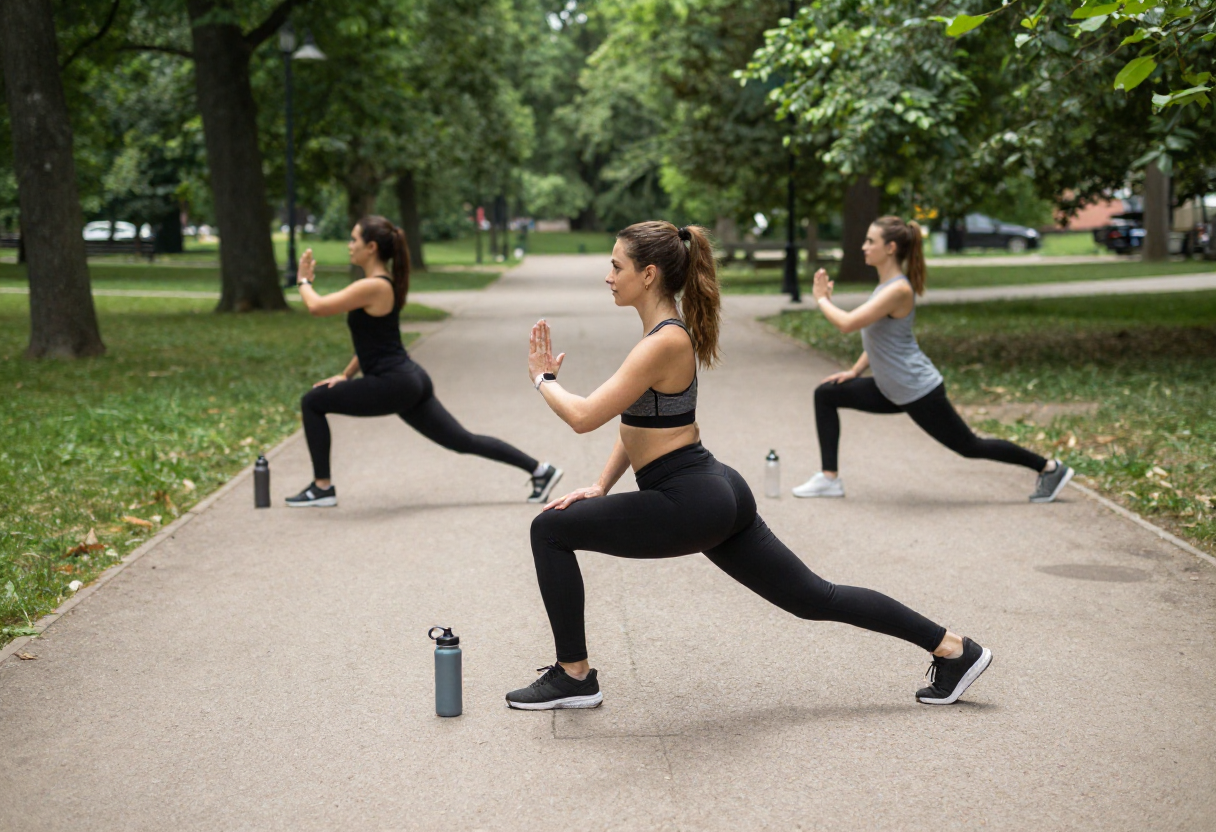
Low impact fat loss – For years, we’ve been told that fat loss requires intense workouts, long gym sessions, and pushing our bodies to exhaustion. Sweat more, burn more, repeat. But for many people, especially women, this approach backfires. Instead of feeling leaner and stronger, they feel inflamed, exhausted, constantly hungry, and stuck. This is where low-impact exercise comes in — not as a shortcut, but as a smarter, more sustainable approach to fat loss that works with your hormones instead of against them.
Low-impact exercise doesn’t mean easy or ineffective. It simply means movement that reduces stress on your joints and nervous system while still delivering powerful metabolic benefits. When done consistently, it can support fat loss, improve insulin sensitivity, balance hormones, reduce inflammation, and lower cortisol — the stress hormone that often sabotages weight loss efforts without people realizing it.
Why Cortisol Matters More Than Calories Burned
Cortisol is your body’s primary stress hormone. It rises in response to physical stress, emotional stress, lack of sleep, under-eating, and overtraining. Short-term cortisol increases are normal and helpful, but chronically high cortisol can make low-impact fat loss much more difficult.
High cortisol levels are associated with:
- Increased belly fat storage
- Muscle breakdown instead of fat loss
- Sugar and carbohydrate cravings
- Poor sleep quality
- Water retention and bloating
- Fatigue and burnout
High-intensity workouts can spike cortisol, especially when combined with busy schedules, poor sleep, or calorie restriction. Low-impact exercise creates a different response: it challenges the body gently while keeping stress hormones balanced, allowing fat-burning processes to work more effectively over time.
By choosing the right intensity and movement, you can support fat loss without overstressing your system, making your results more sustainable.
Why Low-Impact Exercise Is More Sustainable for Fat Loss
Low-impact fat loss isn’t about what you do once or twice a week — it’s about what you can maintain consistently. Low-impact exercise supports long-term adherence because it’s easier to recover from, less mentally exhausting, and more adaptable to real-life schedules.
When exercise feels manageable, you’re more likely to:
- Stick with it long-term
- Move more frequently
- Avoid injury and burnout
- Maintain motivation
- Support hormonal and metabolic balance
This consistency is what drives sustainable low impact fat loss, not short bursts of extreme effort followed by long breaks. By choosing exercises that your body can handle regularly, you create an environment where fat loss and hormone balance happen naturally over time.
Walking: The Underrated Fat Loss Tool
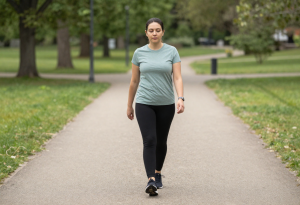
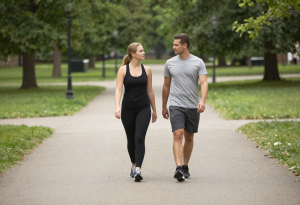
Walking is one of the most effective low-impact exercises for fat loss, yet it’s often dismissed because it doesn’t feel intense enough. In reality, walking improves fat metabolism, supports blood sugar regulation, and helps balance stress hormones — all key for effective weight management.
Regular walking encourages the body to use fat as fuel and improves insulin sensitivity, helping manage carbohydrates more effectively and reducing signals for fat storage.
Calories Burned and Weight Loss Estimates (30-Minute Sessions, 5x/week)
| Exercise Type | Pace / Intensity | Calories Burned (85 kg / 187 lb) | Weight Loss / Week* (85 kg / 187 lb) | Weight Loss / Week* (100 kg / 220 lb) | Weight Loss / Week* (120 kg / 264 lb) |
|---|---|---|---|---|---|
| Walking | Slow | 110 kcal | 0.08 kg / 0.18 lb | 0.09 kg / 0.20 lb | 0.10 kg / 0.22 lb |
| Walking | Moderate | 180 kcal | 0.12 kg / 0.26 lb | 0.14 kg / 0.31 lb | 0.16 kg / 0.35 lb |
| Walking | Brisk | 250 kcal | 0.16 kg / 0.35 lb | 0.19 kg / 0.42 lb | 0.22 kg / 0.48 lb |
| Light Jog | Moderate | 320 kcal | 0.21 kg / 0.46 lb | 0.24 kg / 0.53 lb | 0.28 kg / 0.62 lb |
*Based on 5 sessions per week, assuming 1 kg (≈2.2 lb) of fat ≈ 7700 kcal. Estimated weight loss may vary depending on diet, activity, and individual metabolism.
Daily walking or a light jog can also support:
- Lower cortisol levels
- Improved digestion
- Reduced bloating
- Better sleep
- Appetite regulation
- Steady energy throughout the day
Unlike high-intensity workouts, these activities do not trigger a rebound stress response that increases hunger or fatigue later. This makes them especially effective for people dealing with stubborn weight, hormonal imbalances, or chronic stress.
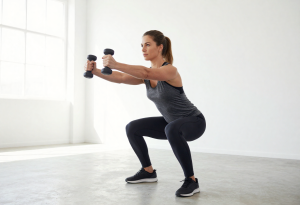
Strength Training Without High Impact
Strength training is essential for fat loss because building muscle helps increase metabolic rate and improves insulin sensitivity. However, it doesn’t need to be high-impact or extreme to be effective.
Low-impact strength training focuses on controlled movements, proper form, and moderate resistance. This allows you to build strength without placing unnecessary stress on your joints or nervous system.
Examples of low-impact strength exercises include:
- Bodyweight squats
- Static lunges or split squats
- Glute bridges or hip thrusts
- Seated or standing rows
- Dumbbell chest press
- Romanian deadlifts
- Step-ups onto a low platform
These exercises can be performed slowly and with control, making them highly effective for building muscle while keeping intensity manageable.
Benefits of low-impact strength training include:
- Increased lean muscle mass
- Improved bone density
- Better posture and stability
- Enhanced fat-burning potential
- Reduced risk of injury
By keeping rest periods adequate and avoiding excessive volume, strength training can support fat loss while keeping cortisol levels more balanced. This makes it a sustainable option for long-term results without unnecessary strain on the body.
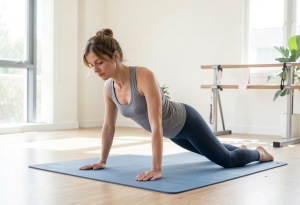
Pilates and Barre for Body Recomposition
Pilates and barre-style workouts are excellent low-impact options for fat loss because they focus on controlled movements, core engagement, and muscular endurance. These training styles help build strength while improving alignment, stability, and overall mobility.
Pilates, in particular, targets deep core muscles that support posture and movement efficiency. Over time, this can improve how the body looks and functions, even without high-intensity training.
Common Pilates exercises include:
- The hundred
- Glute bridges
- Leg lifts
- Plank variations
- Roll-ups
- Bird-dog
Pilates can help improve:
- Core strength
- Posture
- Muscle tone
- Mind-body awareness
Barre workouts focus on small, controlled movements that challenge stabilizing muscles. This creates muscular fatigue without placing excessive stress on the joints or cardiovascular system.
Common barre-style exercises include:
- Pulsing squats
- Heel raises (calf raises)
- Leg lifts at the barre
- Isometric holds
- Small range lunges
Both Pilates and barre encourage slower, more mindful movement patterns. This not only supports muscle development and body recomposition but also helps regulate the nervous system and reduce stress-related fat storage.
When done consistently, these low-impact methods can support fat loss while improving strength, control, and overall body composition.

Swimming and Water-Based Exercise
Swimming is one of the most joint-friendly exercises available. Water provides natural resistance, creating a full-body workout while minimizing impact on the joints. This makes it an ideal option for people with injuries, joint pain, or higher body weight.
Because water supports the body, it reduces strain while still allowing muscles to work effectively. This means you can build strength, improve fitness, and burn calories without the stress that often comes with high-impact training.
Common water-based exercises include:
- Freestyle or breaststroke swimming
- Water walking or jogging
- Aqua aerobics
- Pool-based resistance movements
- Kicking drills using a kickboard
Swimming and water-based exercise can support:
- Cardiovascular fitness
- Muscle toning
- Calorie expenditure
- Reduced inflammation
The cooling effect of water also helps regulate body temperature and reduce perceived effort. This can make workouts feel more manageable and help keep cortisol levels lower compared to high-intensity land-based exercise.
As a result, water-based training is a highly effective option for supporting fat loss while reducing stress on the body and improving overall recovery.
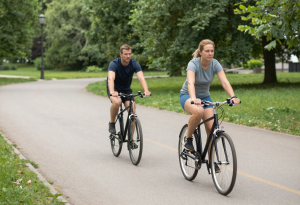
Cycling at a Moderate Pace
Cycling, whether outdoors or on a stationary bike, is a highly effective low-impact exercise when performed at a steady, moderate pace. The key is to avoid pushing intensity to the point of exhaustion, as this can increase stress on the body and reduce sustainability.
Moderate cycling allows you to build fitness while keeping the movement smooth and controlled, making it easier to recover and stay consistent over time.
Common cycling approaches include:
- Outdoor cycling on flat or gently rolling terrain
- Stationary cycling at a steady pace
- Light resistance cycling for endurance
- Interval-style rides with controlled, moderate efforts
- Casual rides focused on duration rather than speed
Cycling at a moderate pace can help improve:
- Cardiovascular health
- Leg strength
- Muscular endurance
- Fat metabolism
Keeping sessions enjoyable rather than exhausting helps reduce the stress response that can interfere with fat loss. This makes cycling a sustainable option that supports long-term consistency, which is one of the most important factors for achieving results.
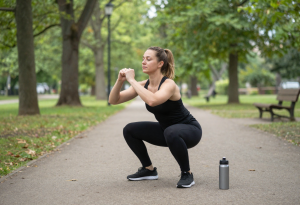
How Often Should You Do Low-Impact Exercise?
When it comes to fat loss, consistency matters far more than intensity. Most people benefit from moving their bodies in some way most days of the week. This doesn’t mean doing structured workouts daily, but rather maintaining regular, intentional movement.
A balanced approach may include:
- Daily walking
- Strength training 2–3 times per week
- Mobility or yoga sessions for recovery
- Occasional higher-intensity sessions if well tolerated
Listening to your body is key. If you feel energized and stable after exercise, it’s likely supporting fat loss. If you feel drained, sore for days, or constantly hungry, your approach may need adjusting.
Signs Your Exercise Is Supporting Fat Loss (Not Sabotaging It)
Fat loss isn’t always immediately visible on the scale. Often, the body shows internal signs of progress first.
Positive signs include:
- Stable energy throughout the day
- Improved sleep quality
- Reduced cravings
- Less bloating
- Improved mood
- Consistent motivation to move
These changes often indicate improved metabolic health and hormonal balance, which are essential for sustainable fat loss.
Why Less Stress Often Leads to Better Results
Many people find that reducing exercise intensity actually improves their results. When overall stress is lower, hormones begin to rebalance, inflammation decreases, and the body becomes more efficient at using stored fat for energy.
Low-impact exercise supports:
- Recovery
- Hormonal balance
- Sustainable routines
- Long-term progress
Rather than working against your body, this approach works with it.
Building a Routine That Actually Works
The most effective exercise routine is one you can maintain consistently. Low-impact exercise allows for flexibility, variety, and enjoyment — all of which are critical for long-term success.
By combining walking, strength training, mobility work, and lower-stress movement, you create a routine that supports fat loss without overwhelming your body.
Fat loss doesn’t require extreme effort or punishment. It requires consistency, balance, and an understanding of how your body responds to stress. Low-impact exercise offers a sustainable path forward — one that delivers results over time.
Frequently Asked Questions (FAQ)
Q1: How often should I do low-impact exercise for fat loss?
Most people benefit from moving most days of the week. A balanced routine could include daily walking, 2–3 strength sessions, and occasional mobility or yoga work. Consistency matters more than intensity.
Q2: Can low-impact exercise really help burn belly fat?
Yes. Low-impact exercise supports fat loss by improving insulin sensitivity, lowering cortisol, and promoting hormonal balance — all of which help your body use stored fat efficiently.
Q3: How long should each session be?
Even 20–30 minutes of walking, swimming, cycling, or gentle strength training can be effective if done consistently. Over time, longer or slightly more challenging sessions can increase calorie burn without spiking stress hormones.
Q4: Is it okay to combine low-impact exercise with high-intensity workouts?
Absolutely, if your body tolerates it. Low-impact workouts can be used for active recovery on non-intensive days, keeping cortisol and joint stress lower while supporting fat loss.
Q5: How quickly will I see results?
Fat loss may not be immediately visible on the scale. Watch for positive signs such as better sleep, reduced cravings, less bloating, stable energy, and improved mood. These internal changes often precede visible fat loss.
Research shows that walking and other moderate, low‑impact activities can support fat loss and improve metabolic health by enhancing insulin sensitivity and cardiovascular fitness. According to the Mayo Clinic, regular physical activity, such as walking and strength training, helps boost metabolism and supports overall weight management. Evidence from the American Council on Exercise highlights that low‑impact exercises like Pilates and cycling can improve muscular strength and endurance while reducing joint stress.
