
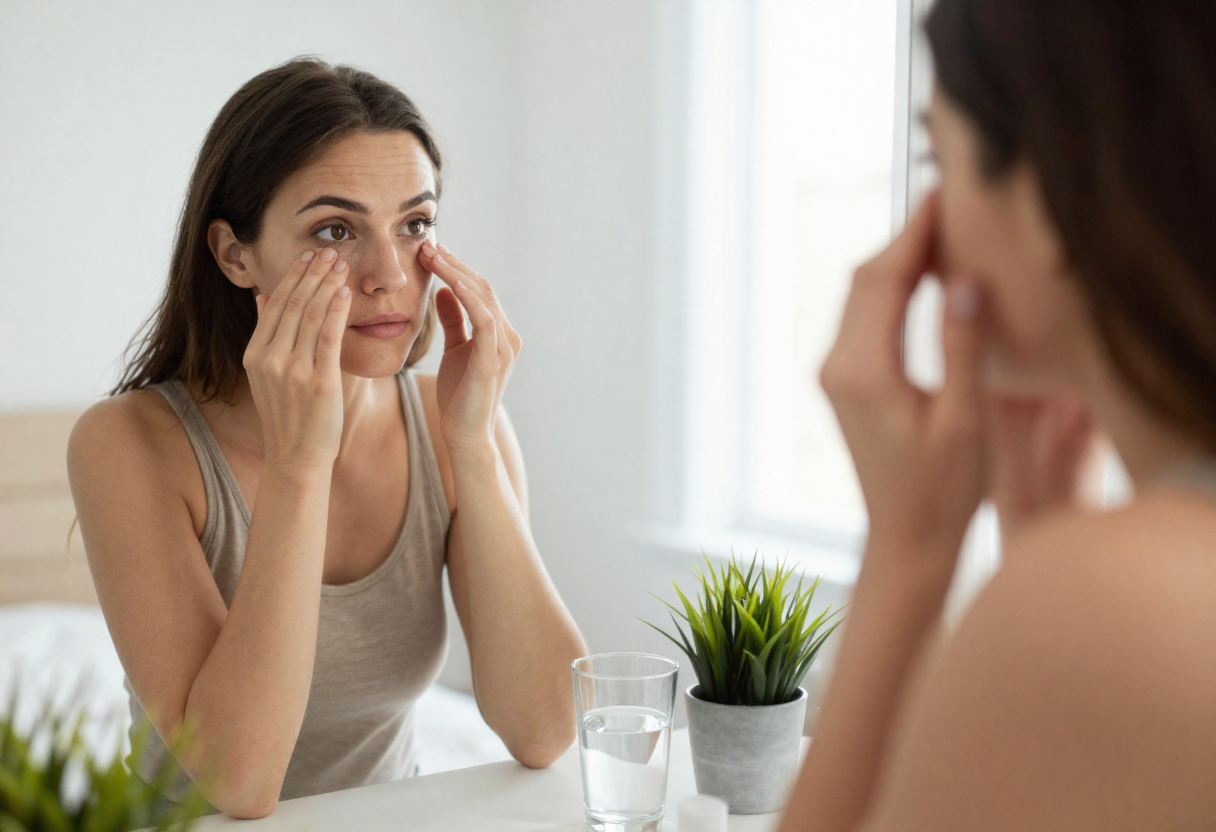
If you’ve ever wondered, why am I puffy in the morning, you’re not alone. Waking up with swelling around your eyes, face, fingers, or even your stomach can feel frustrating — especially when it seems to disappear later in the day. But morning puffiness is rarely random. Your body is constantly communicating, and early swelling is often a sign of fluid shifts, diet choices, sleep position, hormonal changes, hydration levels, stress response, or inflammation.
Because puffiness often settles by midday, it’s easy to ignore. However, those early signs can reveal patterns in how your body balances fluids, recovers overnight, and manages inflammation. While occasional swelling isn’t usually serious, persistent morning puffiness may point to lifestyle habits or underlying factors that affect energy, digestion, sleep quality, and overall health.
Understanding what causes morning swelling is the first step toward waking up feeling lighter, clearer, and more comfortable.

Lack of Deep Sleep Can Cause Morning Puffiness
One overlooked reason people ask, “Why am I puffy in the morning?” is poor-quality sleep. Your body does its most important repair work overnight. During deep sleep, the lymphatic system helps clear excess fluid, waste products, and inflammatory byproducts that build up during the day.
If your sleep is shallow, restless, or frequently interrupted, this fluid-clearing process becomes less efficient. As a result, your body may retain more water — especially around the eyes, face, and fingers. Even a single night of poor sleep can lead to noticeable morning swelling.
Many people assume they “slept fine” simply because they were in bed long enough. But when it comes to reducing puffiness, sleep quality matters more than sleep quantity.
How to Reduce Puffiness from Poor Sleep
- Aim for consistent sleep and wake times
- Keep your bedroom cool and dark
- Reduce screen exposure 1–2 hours before bed
- Avoid late-night salty or processed snacks
- Elevate your head slightly to prevent fluid pooling
Improving deep sleep supports proper overnight drainage and helps you wake up feeling less swollen and more refreshed.

You Ate More Salt or Sugar Than You Realised
Another common reason people wonder – Why am I puffy in the morning is fluid retention from salt or sugar intake the day before.
High-sodium foods — such as takeaway meals, chips, sauces, and processed meats — cause your body to hold onto water. This is because your system retains fluid to dilute excess sodium in the bloodstream. The result? Swelling that’s often most noticeable in your face, eyelids, and fingers when you wake up.
Sugar can have a similar effect. Large amounts of refined sugar pull water into your tissues and may increase inflammation, which can worsen morning puffiness and bloating.
This swelling tends to show up in the morning because your body is actively balancing fluids while you sleep — and if there’s excess sodium or sugar to process, fluid retention becomes more visible.
How to Reduce Puffiness from Salt or Sugar
- Drink extra water after salty meals
- Include potassium-rich foods like bananas, spinach, or potatoes
- Limit heavily processed foods in the evening
- Choose whole, minimally processed dinner options
Balancing sodium and hydration can make a noticeable difference in how your face and body look and feel the next morning.

You’re Slightly Dehydrated (Even If You Drink Water)
Mild dehydration is one of the most overlooked answers to the question, “Why am I puffy in the morning?”
When you don’t drink enough fluids throughout the day, your body shifts into protection mode. Instead of releasing excess fluid overnight, it holds onto water to prevent further loss. This can lead to swollen fingers, puffy eyes, facial fullness, or even mild abdominal bloating when you wake up.
Dehydration also thickens lymphatic fluid, slowing its ability to properly drain waste and excess water while you sleep. The result? You wake up feeling heavier or swollen — even if you didn’t eat anything unusual the night before.
How to Reduce Dehydration-Related Puffiness
- Sip water steadily throughout the day
- Avoid relying only on coffee or tea
- Add electrolytes occasionally (especially in hot weather)
- Drink a glass of water before your morning coffee
Consistent hydration supports better overnight drainage and helps reduce visible morning swelling.
Hormones Are Shifting (More Than You Realise)
Hormones control fluid balance, and they fluctuate constantly — especially before your period, during perimenopause or menopause, under chronic stress, or when sleep is inconsistent. When hormones like estrogen and aldosterone rise, your body holds more water.
This kind of puffiness often comes with bloating, breast tenderness, or waking up feeling heavier than usual.
How to fix it:
Support your hormones by reducing stress, prioritising sleep, eating whole foods, and keeping caffeine and alcohol moderate.

Your Lymphatic System May Be Sluggish
Another key reason people ask, “Why am I puffy in the morning?” is a slow-moving lymphatic system. Think of your lymphatic system as your body’s natural drainage network. Unlike your heart, it has no pump — it relies on movement, breathing, posture, and muscle activity to circulate lymph fluid and remove excess water, waste, and toxins.
If you spend long periods sitting, move very little in the evenings, or sleep curled up tightly in one position, lymph flow can slow. The result? Fluid can pool in areas like your face, under the eyes, and even your hands, making you appear and feel puffy in the morning.
How to Boost Lymphatic Flow and Reduce Puffiness
- Move more during the day — short walks or stretching breaks
- Stretch gently before bed to relax muscles and improve circulation
- Unclench your jaw and relax facial muscles
- Try a light morning face or lymphatic massage to stimulate drainage
Keeping lymph fluid moving naturally supports overnight drainage and reduces visible swelling.

Your Gut Is Irritated
Morning puffiness isn’t always just about fluid or salt — it can also signal that your gut is irritated. Inflammation from food sensitivities, heavy meals, constipation, or an imbalance in gut bacteria can lead your body to retain water. This type of puffiness often shows up in the lower face, hands, and even the abdomen.
How to Reduce Gut-Related Puffiness
- Eat more slowly to aid digestion
- Avoid overeating late at night
- Focus on whole, anti-inflammatory foods: vegetables, fruits, lean proteins, and yogurt
- Reduce foods that commonly irritate your gut, such as highly processed or spicy meals
Supporting gut health naturally can reduce swelling and help you feel lighter in the morning.

You’re Under More Stress Than You Think
Even subtle stress can contribute to morning puffiness. Elevated cortisol — your body’s primary stress hormone — influences how your body stores water, salt, and handles inflammation. You might not feel stressed in dramatic ways; instead, it can show up as irritability, racing thoughts at night, waking up tired, or going to bed feeling “wired.”
When cortisol is high, your body tends to retain fluid, especially overnight, making swelling around your eyes, face, and hands more noticeable in the morning.
How to Reduce Stress-Related Puffiness
- Take short “reset” moments during the day — a few slow breaths, a brief walk, or two minutes of quiet meditation
- Maintain a consistent bedtime routine to support cortisol rhythm
- Gentle stretching or yoga in the evening can help your body relax and improve overnight fluid balance
Managing stress supports both your lymphatic system and overall hormonal balance, helping you wake up feeling less puffy.

A Gentle Shift Makes a Big Difference
Morning puffiness isn’t a flaw — it’s your body’s way of giving feedback. It reflects your sleep quality, hydration, stress levels, hormones, and eating habits.
The good news? You don’t need drastic changes to see results. Small, consistent adjustments — like drinking more water, moving your body regularly, reducing late-night snacks, improving sleep depth, or managing stress — can make a noticeable difference in how you look and feel in the morning.
By paying attention to these cues, you can wake up feeling lighter, more refreshed, and ready to start your day with energy and clarity.

Frequently Asked Questions (FAQs)
1. Is morning puffiness normal?
Yes. Occasional swelling in the face, eyes, or hands is common and usually temporary. It often reflects fluid shifts, mild dehydration, or lifestyle factors.
2. How can I reduce puffiness quickly in the morning?
Simple strategies like drinking water, gentle facial massage, light stretching, or using a cool compress can help reduce swelling within minutes.
3. Can diet affect morning puffiness?
Absolutely. High salt, sugar, and processed foods can cause fluid retention overnight. Eating balanced meals and limiting heavy late-night snacks can help.
4. Does sleep position matter?
Yes. Sleeping on your back with a slightly elevated head can help fluid drain overnight, while curled positions or face-down sleeping may increase puffiness.
5. When should I see a doctor?
Seek medical advice if swelling is sudden, painful, persistent, or accompanied by other symptoms like shortness of breath, severe headaches, or chest pain.
For more information on causes of morning puffiness, fluid retention, and ways to reduce swelling, you can refer to trusted medical sources such as the Mayo Clinic and Cleveland Clinic. These resources provide guidance on hydration, sleep, diet, and lifestyle strategies that support healthy fluid balance and reduce facial and body swelling.
